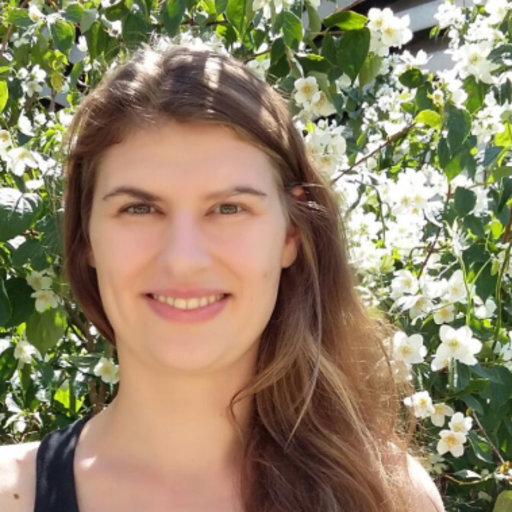
Anna-Lisa Schuler is a long-standing scientific partner of the Tik Group and a researcher in the Cognition and Plasticity group at the Max Planck Institute for Human Cognitive and Brain Sciences in Leipzig.
Our collaboration connects language mapping and chronometric TMS-fMRI with individual targeting, stimulation dose and network responses. Following her postdoctoral work in Vienna, this partnership has continued across institutions and research questions.
A shared programme of research
Language and timing
Together with Maria Vasileiadi, Michael Woletz, Verena Witz and colleagues, we investigate how the site and timing of stimulation shape language-network responses.
Target engagement and dose
Shared studies link individual prefrontal dose–response patterns, acute stimulation responses and brain-state-dependent engagement of remote regions.
Peripartum depression and Riseup-PPD
Anna-Lisa led the neuroimaging and neurophysiology working group of COST Action Riseup-PPD (CA18138, 2019–2023). With Action Chair Ana Ganho-Ávila, Martin Tik and colleagues, this collaboration contributed to the 2025 systematic review and meta-analysis of the neural correlates of peripartum depression.
The publication credits Anna-Lisa and Ana with supervision; Martin contributed to conceptualisation, validation and manuscript review. Maria Vasileiadi is also a coauthor.
Selected shared publications
Chronometric interleaved TMS-fMRI shows state-dependent network effects underlying speech production
Vasileiadi M, Schuler AL, Woletz M, Witz V, Grosshagauer S, Coetzee J, Tik M.
Different stimulation times during object naming produce different network responses. Published online in December 2025; 2026 journal volume.
Neural correlates of peripartum depression: a systematic review, meta-analysis and comparison to major depressive disorder
Sobral and colleagues, including Maria Vasileiadi, Martin Tik, Ana Ganho-Ávila and Anna-Lisa Schuler.
A Riseup-PPD collaboration synthesising neuroimaging evidence. The paper explicitly acknowledges COST Action CA18138.
Chronometric TMS-fMRI of personalized left dorsolateral prefrontal target reveals state-dependency of subgenual anterior cingulate cortex effects
Grosshagauer S et al.
A study in healthy participants examining how task timing changes prefrontal and remote network engagement.
Concurrent TMS/fMRI reveals individual DLPFC dose-response pattern
Tik M et al.
Prefrontal BOLD responses vary between individuals across motor-threshold-based stimulation intensities.
Functional connectivity explains how neuronavigated TMS of posterior temporal subregions differentially affect language processing
Vasileiadi M et al.
Connectivity and electric-field modelling help interpret the naming effects of stimulation at nearby temporal targets.
Acute TMS/fMRI response explains offline TMS network effects – An interleaved TMS-fMRI study
Tik M et al.
Connecting the response during stimulation with network changes measured after stimulation.